- Have any questions?
- +263 (242) 777 797
- salesharare@urh.co.zw


5. POLY-V MICRO-V OR MULTI RIB BELTS
February 14, 2019
VARIABLE SPEED
February 14, 2019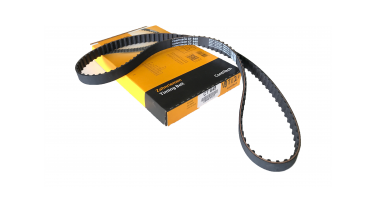
AUTOMOTIVE TIMING BELTS
APPLICATION
a) Maintaining correct speed ratios of the crankshaft and camshaft in vehicle engines. Replacement is necessary at 100 000km.
b) Industrial machinery where precision timing of gears is necessary, e.g. lathes, special line boring equipment, etc.
RANGE
The two main categories of Timing Belts are :
a) Automotive.
b) Industrial Timing Belts.
The differences are the profile (or shape) of the horizontal teeth and their distances apart. Exact replacements of original equipment are essential.
Universal Rubber and Hose stock an extensive range of automotive Timing Belts, while Industrial Timing Belts can be imported, given the correct size and code, from the customer’s original belt. The lead-time on imported timing belts is usually 7 days and no return of correctly supplied belts will be accepted.

NOTE :
a) The above ranges are constantly expanding due to vehicle manufacturers changing specifications.
b) We can refer to various reputable manufacturers’ Timing Belt Catalogues that assist with identifying different sizing systems and vehicle requirements. Cars imported directly from Japan are different in most cases to either locally or South African assembled, and as such, Timing Belts for Japanese imported cars can be difficult to replace.
BRAND
RAM, Contitech, all comply with international quality standards.
Flat, nylon reinforced belts offer high tension with maximum flexibility and oil and heat resistance. Horizontal teeth of exact profiles to suit matching pulley grooves keep the machine or engine in time, with its rotational functions, e.g. open valves, close valves.